
Home / Treatments / Occlusal splints
TMJ – Occlusal splint
A clear guard, made for your teeth, that you wear at night.
Custom occlusal splintsFamily-run since 2014Payment plans
Does this sound like you?

You grind your teeth at night
Often without knowing. Dentists call it bruxism.
You clench your jaw
Your jaw muscles feel tight and sore.


Your teeth are wearing down
They look flatter, or they chip.
How a splint helps
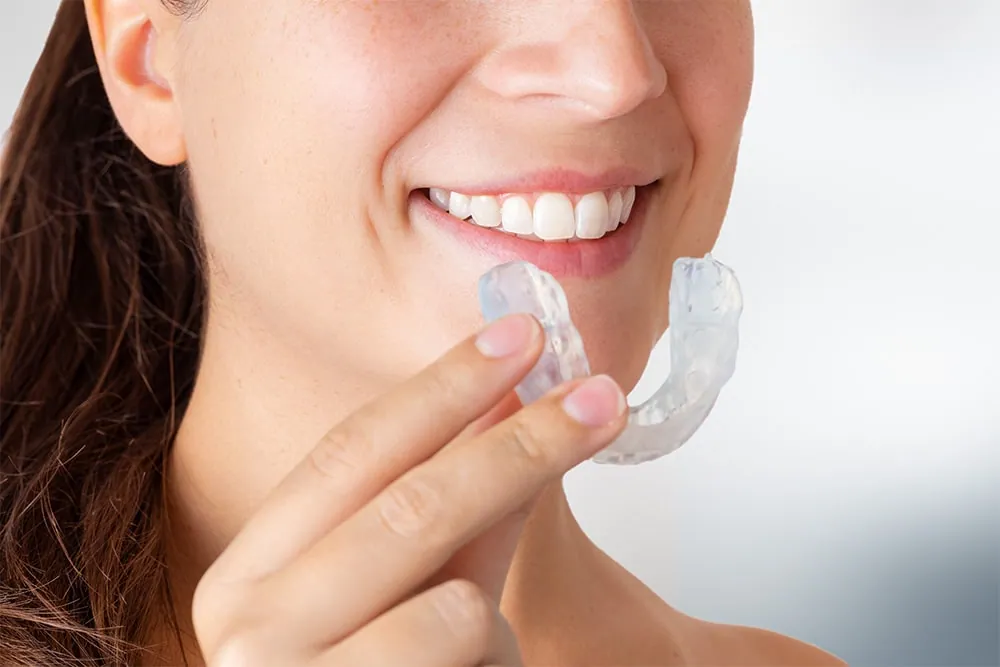
Made for your mouth
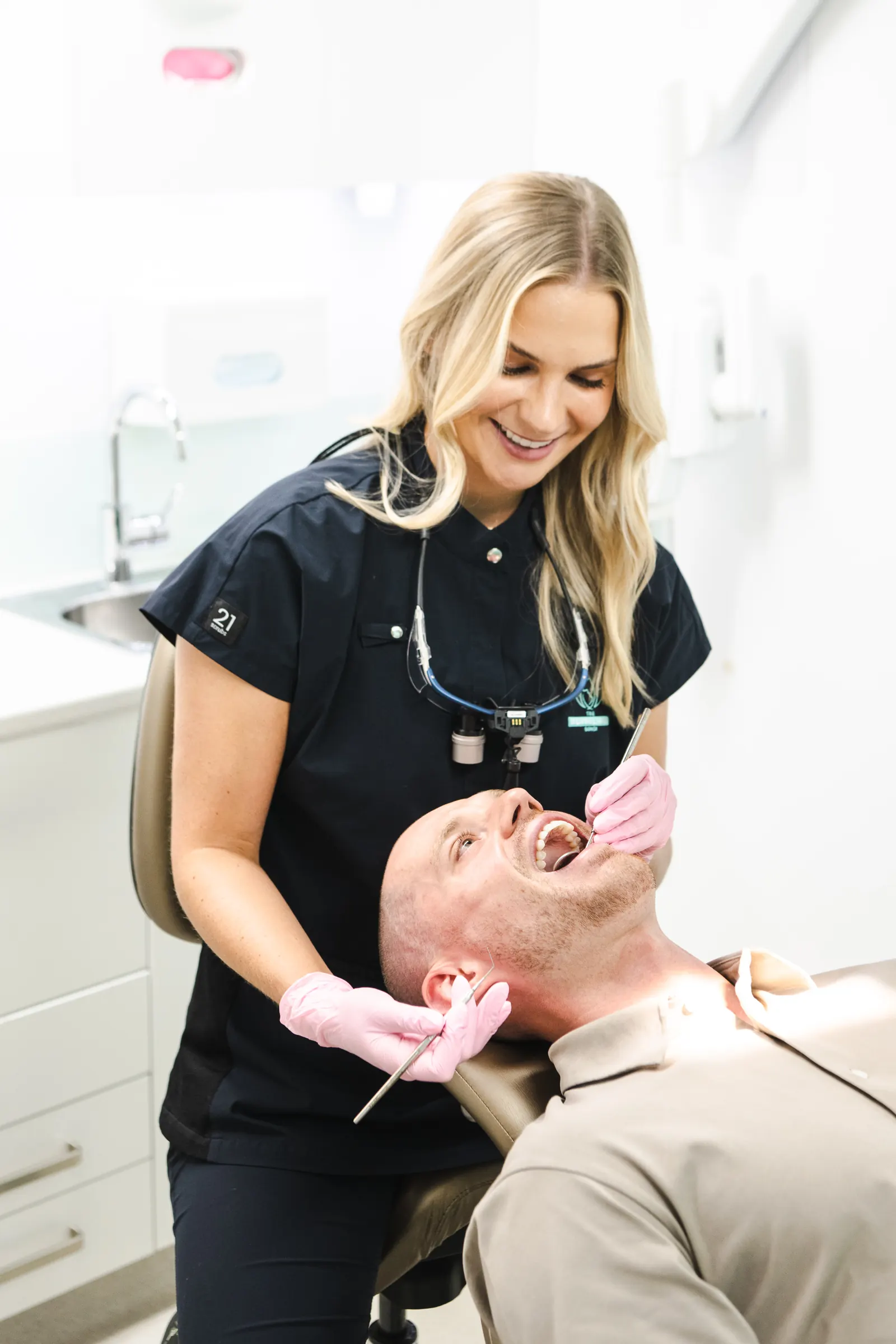
A clear guard shaped to your teeth. It fits snugly, and you can still open and close your mouth.
It protects your teeth
It won't stop the grinding. It sits between your teeth so they don't wear each other down.
Easy to wear
You can yawn, drink and talk clearly with it in.
Your questions
How does the splint work?
The splint doesn’t stop teeth grinding, but it provides a protective barrier between your tooth surfaces to even out the pressure across your jaw. By creating a physical barrier between your upper and lower teeth, it helps to protect them from teeth grinding damage.
Is it comfortable?
Your custom-made splint will fit comfortably over your upper or lower teeth. While wearing your device, you’ll be able to fully open and close your mouth, yawn, drink, take tablets and even speak clearly.
Read the full guide to night splints
What is an occlusal splint?
A splint is a special mouth guard worn during sleep to help prevent the damage to your teeth, temporomandibular joint and alleviate jaw and muscle pain that can be caused by bruxism and jaw clenching.
It is designed with your comfort in mind and is custom made making it a precise snug fit and allowing you to open and close your mouth naturally.
TMJ disorder is a painful life interruption that you shouldn’t have to suffer with.
In most cases, the main symptom of TMJ disorder is jaw pain and clicking noises when chewing.
The symptoms of TMJD can be mild or intense. They can also be acute or chronic. In many cases, the signs of temporomandibular joint disorder start subtly and intensify over time.
For many people with temporomandibular joint disorders, the cause is unknown.
Some causes include:
- Changes to the bite after orthodontic treatment
- Breathing issues, leading to mouth breathing
- Stress related teeth grinding. Many people with TMJ problems do not grind their teeth. For some people, the stress associated with this disorder may be caused by the pain, as opposed to being the cause of the problem.
- Poor posture can also be an important factor in TMJ symptoms. For example, holding
your head forward while looking at a computer all day strains the muscles of your face
and neck. - Other factors that may make TMJ symptoms worse include poor diet and lack of sleep.
Many people end up having “trigger points.” These are contracted muscles in your jaw, head, and neck. Trigger points can refer pain to other areas, causing a headache, earache, or toothache.
Symptoms associated with TMJ disorders may be:
- Biting or chewing difficulty or discomfort
- Clicking, popping, when opening or closing the mouth
- Dull, aching pain in the face
- Earache
- Headache
- Jaw pain or tenderness of the jaw
- Locking of the jaw
- Difficulty opening or closing the mouth
How We Treat TMD at The Dental Spa Bondi:
We will conduct a thorough examination including radiographs, and imaging of the joints.
Treatment might include:
- An occlusal splint as a muscle stabilizer device
- Muscle relaxant injections in the affected muscles
- Lifestyle adjustments like a softer diet to ease muscle and joint stress
- Stretching exercises to reduce muscle spasms
- Medications such as anti-inflammatories and muscle relaxants for pain relief
- Dental restorations, or referral to an orthodontist or periodontist and in more severe cases, a maxilla-facial surgeon.
You might also look at
Ready to book?
Monday to Friday, 108 Bronte Road, Bondi Junction.